
What I Wish People Understood About Life With Ulcerative Colitis

This year’s World IBD Day really made me think about what I think is the most important thing to talk about on awareness days. I have shared my story so many times before that even I can feel bored with hearing it. I was actually planning not to bother posting it, but then I realised the purpose of days like World IBD Day. The purpose is to raise awareness, and that involves sharing my story of living with ulcerative colitis (UC).
This is about raising awareness of IBD and ulcerative colitis to those who don’t already know about it. It’s such a hard disease to explain because it can affect people differently and impact our lives in so many different ways. I wish I could choose just one thing I think is important for people to know, but there are SO MANY!
So, here’s what I wish people understood about life with UC:
The UC diagnosis process can be long and humiliating
It’s often a battle to even get a referral to the right department for testing, whilst guess diagnoses are thrown about, such as IBS.
Meanwhile, we live in pain, anger, and frustration. Then, there are the diagnostic tests when we finally get there, which can be uncomfortable. They often involve putting things where things don’t normally go. Then there’s the prep for such tests, which can begin days in advance. Limited diets and bowel prep are not fun!
Life with ulcerative colitis is unpredictable
We often live day to day, with no expectation of pain and energy levels the next day. We might be feeling OK, or even good one day, and completely hit a wall the next and have to rest. If we cancel a plan, it’s because we needed to!
Looking OK does not equal feeling OK
Invisible illnesses can be super hard, and it often leaves us feeling judged. If an apparently able-bodied person has to run into an accessible toilet, or parks in a space reserved for those with disabilities, it should be assumed that it’s because they need to, and not that they are just trying to jump a queue or something! I’ve had nasty looks and even comments because I have used an accessible toilet, or because I’ve been in there so long.

Many of us do our best to navigate our lives, even though it feels really tough sometimes. Just because we go to work, or you see us out and about in the supermarket, doesn’t mean we are well. There are necessities that we can’t choose to not do.
Sometimes, we might even go to the pub, to the beach, to the zoo, etc. We fight the pain and fatigue the whole time because we want to experience something! If we didn’t do anything when we didn’t feel well, then we might never get to do anything!
It's not just my gut
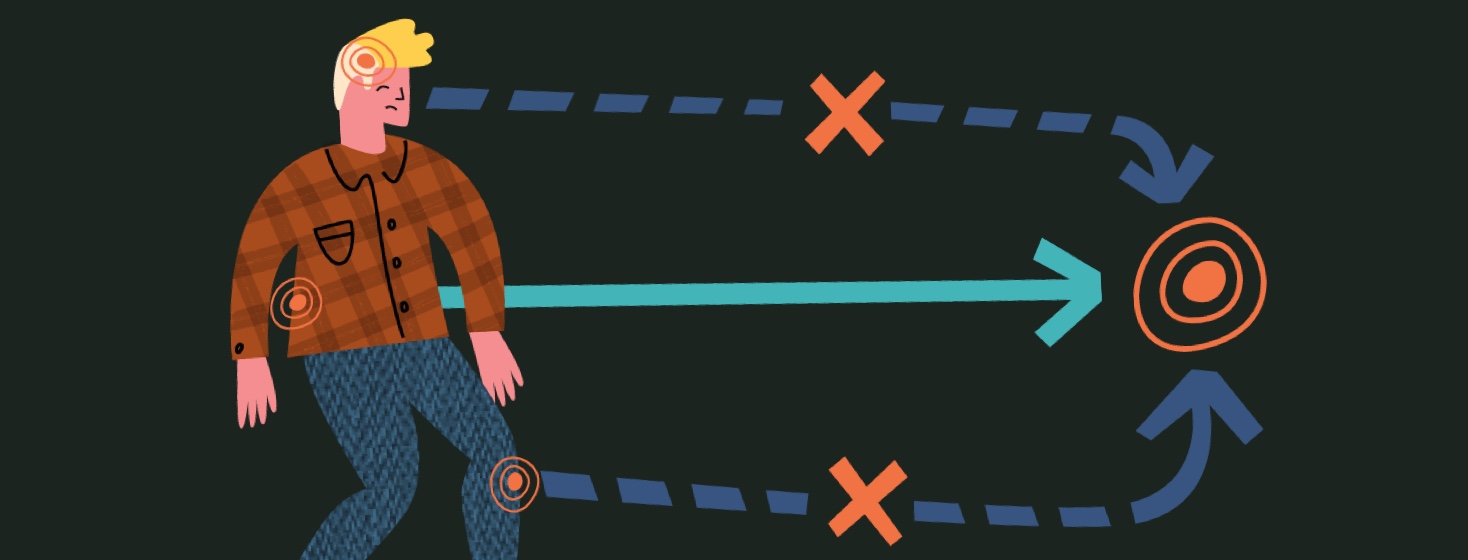
Yes, my gastrointestinal tract causes a lot of the symptoms, but the fact that IBD is an immune-mediated disease means that it can affect a lot more of our bodies. We might suffer from joint pain, eye issues, skin issues, chronic fatigue, and many other random things. Fatigue is such a hard thing to handle or explain to people.
IBD can also lead to mental health strains such as anxiety, but it can also lead to depression, isolation, stress, and even PTSD.
Lacking body confidence can also be a problem. That might be because someone has had surgery, or it might be that we just feel unattractive because we’re constantly on the toilet! Sometimes, it’s just hard to appreciate your body when it’s causing you so much struggle.
Featured Forum
View all responsesWe're not "fussy" eaters
If we are asking for changes to a menu item, or taking a while to choose what to eat, it’s because we have limitations. Things that make our symptoms worse.
We’re not being fussy, we’re looking after ourselves. The worst-case scenario is a hospital admission because we have eaten something we shouldn’t have, so we would really prefer to avoid that.
IBD treatment can be really rough
Because IBD is immune-mediated, the treatment usually aims to alter our immune response in some way. Things like steroids can help get the disease under control quickly, but the side effects can be awful: mood swings, acne, weight gain, and insomnia, to name a few.
Some of us have to self-inject at home, which can be a difficult thing to do and come to terms with. Some of us have infusions, which can be very disruptive to our lives.
Altering our immune responses often makes us more susceptible to suffering badly from bugs that might affect a healthy person very little.
UC and IBS are not the same
The overlap in symptoms is abdominal cramps, changes in bowel habits, and bloating. But IBS has nothing to do with a faulty immune response; it doesn't lead to surgery, it doesn’t come with extra-intestinal manifestations, and it’s usually manageable by diet and medication to ease intestinal spasms.
The myth of remission and chronic fatigue
For many, remission doesn’t mean that all is well. Ongoing fatigue is a common problem. Then, there are functional issues and pain/risk of blockages, etc., due to things like scarring, strictures, and adhesions, which can be a result of previous disease activity and/or surgery.
Some of us live with shortened digestive tracts, with or without a stoma. This might mean that we will forever have problems with absorption, what food we can eat, blockage risks, and other complications.
UC fatigue is more than just "being tired"
Fatigue can feel impossible to describe. It’s not just tired. It’s a physical, mental, and psychological barrier, so it can be hard to move, think, concentrate, and even be happy. It’s not that we are lazy. The suggestion that an early night will help is frankly just annoying. We can’t simply help ourselves by sleeping more, eating better, or exercising.
We’re probably not "fine"
We often say we’re fine when we’re not, or we are fine by our standards. Sometimes, we don’t want to bore people. Sometimes we don’t feel like the person who asked really wants to know the answer. We might not want to feel like the “moaner” of the group. Other times, we just want to pretend we are fine, to ourselves, and to everyone else.
We have to plan everything
Frequently, we can’t just leave the house. We have to think about what and when we eat, and where the toilets are. We have to make sure we have everything with us that we might need, whether that’s medication, stoma supplies, fluids, muscle rubs, or spare clothes.
If we’re planning something that will take a lot of energy, like a day trip out somewhere, planning can start days in advance. We have to think about conserving enough energy in the hope we’ll be able to make it through the day without too much pain and/or fatigue. And we have to think about what we eat so we don’t make the pain worse in advance.
It’s not going away
It is incurable. It's not going anywhere. Period.
Join the conversation